
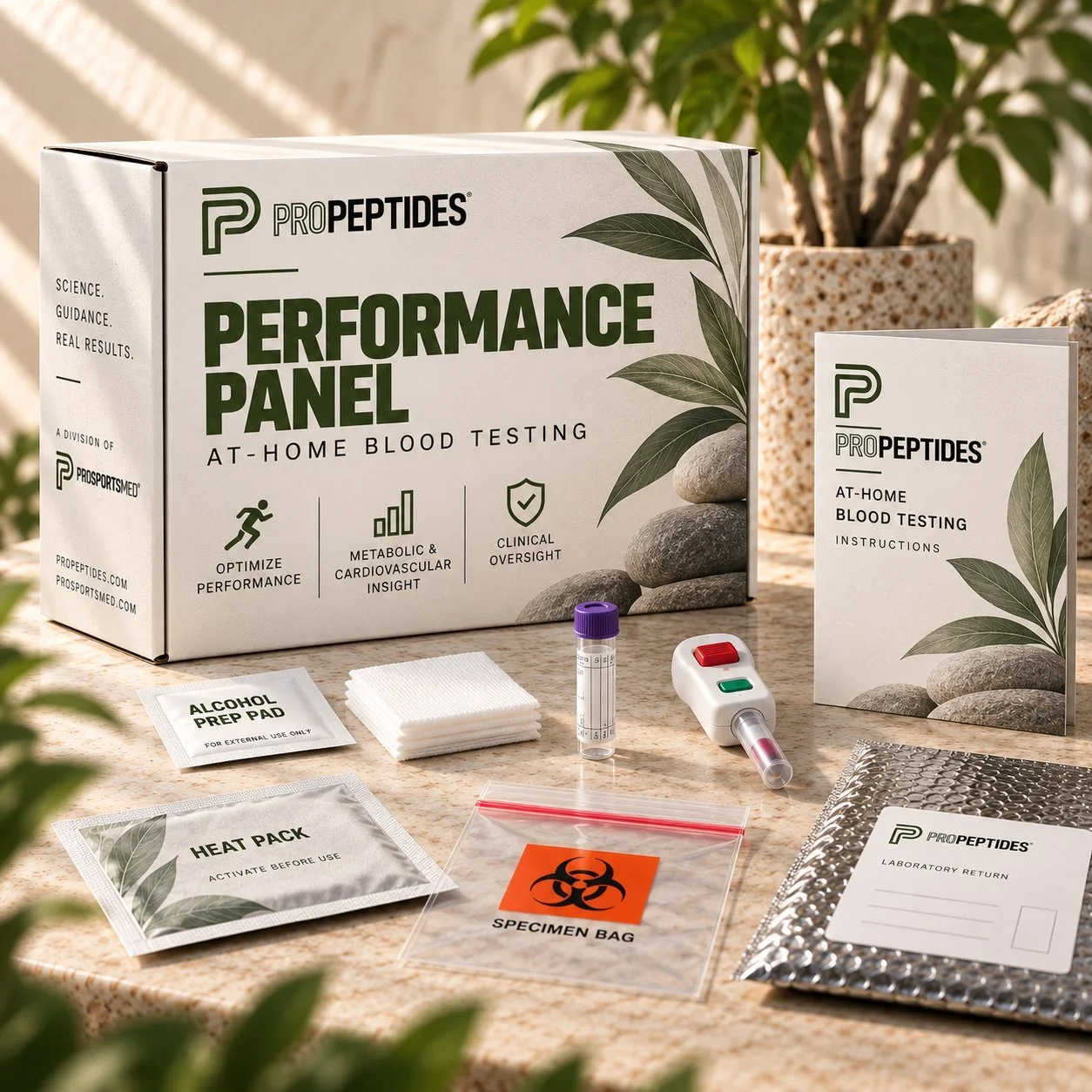
PRO Performance Panel
Our Most Comprehensive Single Panel for Performance, Recovery, Hormones, and Long-Term Health
PRO Sports Medicine Learning Center
Introduction
Performance, recovery, and healthy aging depend on many systems working together. Hormones influence muscle and mood. Thyroid hormones set metabolic pace. Iron and B vitamins determine how well blood carries oxygen. Lipoproteins and inflammation shape long-term cardiovascular risk. A problem in any one of them can limit the rest.
The PRO Performance Panel is designed to look at all of those systems at once. With 41 biomarkers, it is the most comprehensive individual PRO panel. It uses three EasyDraw at-home collection devices and is suited to athletes, active adults, patients on hormone or peptide programs, and anyone who wants a thorough health baseline.
What the Panel Measures
Cardiovascular and metabolic: a standard lipid panel (total cholesterol, HDL cholesterol, LDL cholesterol, and triglycerides), apolipoprotein B (ApoB), apolipoprotein A1 (ApoA1), lipoprotein(a) [Lp(a)], HbA1c, C-peptide, and hsCRP.
Hormones and endocrine: total testosterone, free testosterone, SHBG, estradiol, DHEA-S, prolactin, LH, FSH, cortisol, plus progesterone (female panel) or PSA (male panel).
Thyroid: TSH, free T3, free T4, thyroid peroxidase antibodies (anti-TPO), and thyroglobulin antibodies (anti-TG).
Liver and kidney: ALT, AST, ALP, total bilirubin, direct bilirubin, creatinine, BUN, eGFR, albumin, total protein, and calcium.
Nutrients and iron: vitamin D, vitamin B12, folate, ferritin, serum iron, unsaturated iron-binding capacity (UIBC), total iron-binding capacity (TIBC), and iron saturation.
Advanced Cardiovascular Markers
The standard lipid markers and ApoB are explained in the PRO Core Health Panel chapter. The Performance Panel adds two more:
Apolipoprotein A1 (ApoA1) is the main protein in HDL particles. It reflects the capacity of the cholesterol-clearing system. The ApoB-to-ApoA1 relationship compares harmful and protective particles and is used in some risk assessments.
Lipoprotein(a) [Lp(a)] is an LDL-like particle with an extra protein attached. Its level is largely inherited and changes little with diet or exercise, so most people need to measure it only once. An elevated Lp(a) is an independent cardiovascular risk factor. U.S. guidelines describe 50 mg/dL (about 125 nmol/L) or higher as risk-enhancing. Many people with high Lp(a) have no idea, because standard cholesterol panels do not include it. Knowing it can change how aggressively other risk factors are managed. See Cardiovascular Health.
HbA1c, C-peptide, and hsCRP cover glucose regulation, insulin production, and inflammation; see the PRO GLP & Cardio Panel for detail.
The Expanded Hormone Profile
Total testosterone, free testosterone, SHBG, and estradiol form the core sex-hormone profile, explained in the PRO HRT Monitoring Panel chapter.
LH and FSH are the pituitary signals that drive the testes and ovaries. In men, they show whether low testosterone is coming from the testes (LH and FSH high) or from the brain's signaling (LH and FSH low or normal). External testosterone suppresses LH and FSH, which is relevant for fertility. In women, they reflect cycle phase and menopausal status.
Prolactin is a pituitary hormone. In both sexes, elevated prolactin can suppress reproductive hormones, lower libido, and affect fertility. Stress, sleep loss, exercise, and some medications can raise it.
DHEA-S is an adrenal androgen precursor that declines with age. It provides insight into adrenal output and contributes to the overall androgen picture, particularly in women.
Cortisol is the main stress hormone. It follows a strong daily rhythm, highest within an hour of waking and lowest around midnight, so a single blood cortisol is interpreted with the time of collection. Cortisol context is valuable for athletes with heavy training loads, poor sleep, or symptoms of overreaching, but a single value cannot diagnose adrenal disorders, and abnormal results need confirmatory testing. See Stress Adaptation & Hormesis.
PSA (male) and progesterone (female) complete the sex-specific profile.
The Complete Thyroid Panel
TSH is the pituitary's signal to the thyroid. Free T4 is the main hormone the thyroid releases. Free T3 is the active form, mostly converted from T4 in tissues. Measuring all three shows not only whether thyroid output is adequate but also how well T4 is being converted. Heavy training, calorie restriction, and illness can lower T3.
Anti-TPO and anti-TG antibodies detect autoimmune activity against the thyroid. They are the hallmark of Hashimoto's thyroiditis, the most common cause of an underactive thyroid, and they can appear years before thyroid hormone levels change. Positive antibodies with normal hormone levels usually mean periodic monitoring rather than treatment.
Liver, Kidney, and Calcium
The liver markers (ALT, AST, ALP, bilirubin, albumin, total protein) and kidney markers (creatinine, BUN, eGFR) are explained in the PRO GLP & Cardio Panel chapter. Direct bilirubin helps distinguish harmless elevations in total bilirubin from bile-flow issues. Calcium is tightly regulated by parathyroid hormone and vitamin D. It is essential for muscle contraction, nerve signaling, and bone. Calcium is particularly important to check during high-dose vitamin D supplementation, since excessive vitamin D can raise blood calcium.
Nutrients and the Full Iron Profile
Vitamin D reflects 25-hydroxyvitamin D status (see the Core Health chapter).
Vitamin B12 is required for red blood cell formation, nerve function, and DNA synthesis. Low B12 is more common in vegetarians and vegans, older adults, people on metformin or acid-suppressing medications, and after some GI surgeries. Deficiency can cause fatigue, numbness, and large red cells.
Folate works with B12 in DNA synthesis and red cell production. Low folate usually reflects low intake of leafy greens and legumes, alcohol use, or certain medications.
The iron profile gives a complete picture of iron status:
Ferritin reflects iron stores.
Serum iron is the iron circulating at the moment of the draw. It changes with meals and time of day.
TIBC (total iron-binding capacity) reflects transferrin, the iron transport protein. It rises when the body is short of iron.
UIBC (unsaturated iron-binding capacity) is the unused portion of transport capacity.
Iron saturation is serum iron divided by TIBC, showing how full the transport system is. Low saturation with low ferritin indicates iron deficiency; persistently high saturation with high ferritin can suggest iron overload and warrants evaluation.
Iron is especially important for endurance athletes, menstruating women, frequent blood donors, and men on TRT who donate blood to manage hematocrit.
Who the Panel Is For
Athletes and active adults who want a comprehensive performance baseline
Patients on hormone optimization who want broader context than an HRT panel alone
Anyone with unexplained fatigue, poor recovery, or stalled progress
Patients who want Lp(a), ApoA1, a full thyroid panel, and a full iron profile in one test
Adults building a long-term healthy aging plan
How to Prepare
Follow the kit instructions; this panel uses three devices, so allow extra time.
Collect in the morning, ideally within a few hours of waking, for testosterone and cortisol consistency. Note the time of collection.
Fast for 8 to 12 hours beforehand unless your provider advises otherwise; water is allowed and encouraged. A fasted morning sample improves consistency for lipids, C-peptide, and serum iron.
If on hormone therapy, collect at the point in your dosing cycle your provider specifies.
Pause high-dose biotin if your provider agrees, because it can interfere with thyroid and hormone immunoassays.
Avoid very hard training for a day or two beforehand, and hydrate well.
How Your Results Are Reviewed
Because this panel covers so many systems, provider review is especially valuable. A PRO Sports Medicine provider reviews your results with your history, training, medications, and goals, connecting patterns across systems, such as low ferritin explaining fatigue that looked hormonal, or low free T3 reflecting under-fueling. Clinical review is included for active PRO Foundations members.
How It Fits PRO Care
The Performance Panel is an ideal baseline for PRO Foundations members, athletes, and patients beginning a comprehensive program. It can be combined with the HRT Monitoring Panel or the Peptide Panel for treatment-specific monitoring. Its results feed directly into the strategies described in Exercise as Medicine, Nutrition, and Building a Personalized Program.
Order the PRO Performance Panel
Important Information
This article is educational and is not medical advice. Performance Panel results support clinical assessment and monitoring and do not diagnose medical conditions on their own. Biomarker availability and sex-specific configurations may vary. All results are reviewed by a licensed PRO Sports Medicine provider.
Key References
Sniderman AD, Thanassoulis G, Glavinovic T, et al. Apolipoprotein B Particles and Cardiovascular Disease: A Narrative Review. JAMA Cardiol. 2019.
Kronenberg F, Mora S, Stroes ESG, et al. Lipoprotein(a) in Atherosclerotic Cardiovascular Disease and Aortic Stenosis: A European Atherosclerosis Society Consensus Statement. Eur Heart J. 2022.
Garber JR, Cobin RH, Gharib H, et al. Clinical Practice Guidelines for Hypothyroidism in Adults: Cosponsored by the American Association of Clinical Endocrinologists and the American Thyroid Association. Thyroid. 2012.
Bhasin S, Brito JP, Cunningham GR, et al. Testosterone Therapy in Men With Hypogonadism: An Endocrine Society Clinical Practice Guideline. J Clin Endocrinol Metab. 2018.
National Institutes of Health, Office of Dietary Supplements. Vitamin D: Fact Sheet for Health Professionals.
Clinical Perspective
Comprehensive testing earns its value by connecting systems. Fatigue in an athlete can come from low iron, low free T3, low testosterone, poor sleep with elevated morning cortisol, or simple under-fueling, and the Performance Panel can help distinguish them. Lp(a) and ApoB add a long-term cardiovascular lens that standard panels miss. Used thoughtfully, it is a strong foundation for individualized performance and healthy aging care.