
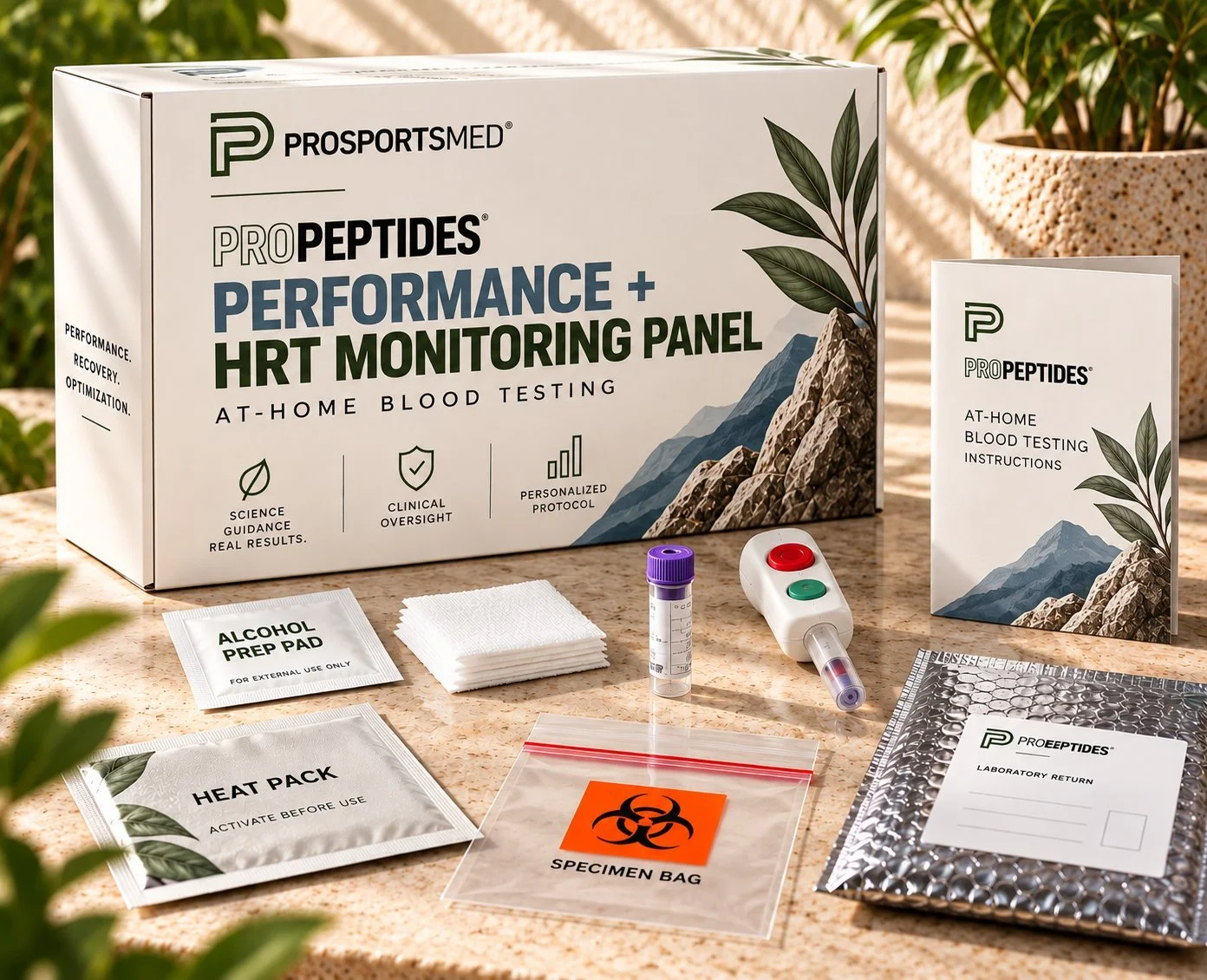
PRO Performance + HRT Monitoring Panel
Comprehensive Performance Testing Plus Targeted Hormone Therapy Monitoring
PRO Sports Medicine Learning Center
Introduction
Hormone optimization is about more than a testosterone number. How someone feels and performs on hormone therapy depends on thyroid function, iron and B vitamin status, cardiovascular health, glucose regulation, cortisol and sleep, and the red blood cell changes that testosterone can cause. When any of those are off, hormone therapy alone will not fix the problem, and it may be blamed for symptoms it did not cause.
The PRO Performance + HRT Monitoring Panel combines the PRO Performance Panel, our most comprehensive 41-biomarker assessment, with the PRO HRT Monitoring Panel, which adds a complete blood count and dedicated hormone therapy monitoring. It is designed for patients on testosterone replacement therapy (TRT) or hormone replacement therapy (HRT) who want the broadest available picture of their health.
What the Combination Covers
From the Performance Panel:
Cardiovascular and metabolic: lipid panel, ApoB, ApoA1, Lp(a), HbA1c, C-peptide, and hsCRP
Hormones: total and free testosterone, SHBG, estradiol, DHEA-S, prolactin, LH, FSH, cortisol, and progesterone (female) or PSA (male)
Thyroid: TSH, free T3, free T4, anti-TPO, and anti-TG antibodies
Liver and kidney: ALT, AST, ALP, total and direct bilirubin, creatinine, BUN, eGFR, albumin, total protein, and calcium
Nutrients and iron: vitamin D, B12, folate, ferritin, serum iron, UIBC, TIBC, and iron saturation
From the HRT Monitoring Panel:
A complete blood count: hematocrit, hemoglobin, red and white cell counts, platelets, MCV, MCH, MCHC, RDW, and MPV
Total testosterone, free testosterone (calculated), SHBG, albumin, and estradiol
A sex-specific marker: PSA for men or progesterone for women
Each biomarker is explained in the PRO Performance Panel and PRO HRT Monitoring Panel chapters.
Why Combine These Two Panels
The blood count is essential during TRT. Testosterone can raise hematocrit, which is the most common laboratory reason to adjust therapy. The Performance Panel does not include a CBC on its own; the HRT component adds it.
Iron and hematocrit go together. Patients who donate blood to manage hematocrit can gradually deplete iron. The Performance Panel's full iron profile, combined with the CBC's red cell indices, shows whether that is happening.
LH and FSH show the system's response. Exogenous testosterone suppresses the pituitary's LH and FSH signals. Seeing them alongside testosterone helps a provider understand native hormone production and fertility considerations.
Progesterone completes the female hormone picture. In the female configuration, both components include progesterone, which shows the second half of the hormone balance alongside estradiol, LH, and FSH. Women on menopausal hormone therapy who have a uterus usually take a progestogen with estrogen to protect the uterine lining, and a progesterone level can help confirm absorption of prescribed progesterone and put sleep, mood, or bleeding changes in context. Synthetic progestins are not detected by a progesterone test, and levels vary with the route of use. In women who still cycle, progesterone peaks about a week before the next period, and reading it next to LH and FSH helps a provider understand where the cycle and the menopausal transition stand.
Thyroid, cortisol, and nutrients explain symptoms. Low free T3, thyroid autoimmunity, low B12 or iron, or disrupted cortisol rhythms can all cause fatigue, low drive, or poor recovery that might otherwise be attributed to the hormone dose.
Cardiovascular risk deserves a full assessment. ApoB, Lp(a), ApoA1, hsCRP, and hematocrit on the same report support a complete cardiovascular discussion for patients on long-term hormone therapy.
A Practical Monitoring Rhythm
Many patients complete this combination before starting hormone therapy and then at least annually, with the HRT Monitoring Panel alone used for interim checks of hematocrit, testosterone, estradiol, and PSA or progesterone. Your provider sets the intervals based on your protocol, results, and history. Consistent timing relative to your dose, consistent hydration, and morning collection make results comparable from test to test.
Who the Panel Is For
Men beginning or using testosterone replacement therapy
Women using hormone replacement therapy
Patients on hormone optimization who want comprehensive cardiovascular, thyroid, and nutrient data
Athletes and active adults on hormone therapy focused on recovery and performance
PRO Foundations members who want the broadest hormone-focused oversight
How to Prepare
Follow the kit instructions for each component, and allow time for multiple collection devices.
Collect in the morning, at the point in your dosing cycle your provider specifies. Note the date and time of your last dose and the time of collection, which matters for cortisol.
Fast for 8 to 12 hours unless your provider advises otherwise (water is allowed) for consistent lipids, C-peptide, and serum iron.
Hydrate well, since dehydration can falsely raise hematocrit.
Men should avoid ejaculation and long bike rides for about 48 hours before collection.
Women who still have cycles should ask their provider which cycle day to collect, since progesterone, LH, FSH, and estradiol all change through the cycle. Women on progesterone therapy should note the product, route, dose, and time of the last dose.
Avoid very hard training for a day or two beforehand, and pause high-dose biotin if your provider agrees.
How Your Results Are Reviewed
A PRO Sports Medicine provider reviews the full report with your hormone protocol, symptoms, training, and history. The review connects patterns across systems, for example, whether fatigue reflects iron depletion from blood donation, whether estradiol is balanced, whether thyroid or cortisol findings need follow-up, and whether cardiovascular markers call for lifestyle or medical attention. Dose changes are made only by your provider. Clinical review is included for active PRO Foundations members.
How It Fits PRO Care
This is PRO's most comprehensive hormone-focused testing option. It fits patients who see hormone therapy as one part of a larger performance and healthy aging plan, as described in Exercise as Medicine, Cardiovascular Health, and Building a Personalized Program.
Order the PRO Performance + HRT Monitoring Panel
Important Information
This article is educational and is not medical advice. Results should be interpreted with symptoms, medical history, medications, and hormone protocols. Laboratory results do not establish treatment safety or effectiveness on their own and do not replace medical care. All results are reviewed by a licensed PRO Sports Medicine provider.
Key References
Bhasin S, Brito JP, Cunningham GR, et al. Testosterone Therapy in Men With Hypogonadism: An Endocrine Society Clinical Practice Guideline. J Clin Endocrinol Metab. 2018.
Kronenberg F, Mora S, Stroes ESG, et al. Lipoprotein(a) in Atherosclerotic Cardiovascular Disease and Aortic Stenosis: A European Atherosclerosis Society Consensus Statement. Eur Heart J. 2022.
Garber JR, Cobin RH, Gharib H, et al. Clinical Practice Guidelines for Hypothyroidism in Adults: Cosponsored by the American Association of Clinical Endocrinologists and the American Thyroid Association. Thyroid. 2012.
Clinical Perspective
Good hormone care treats the whole patient. Pairing a dedicated HRT monitoring panel with comprehensive cardiovascular, thyroid, nutrient, and adrenal markers helps providers keep therapy safe, avoid chasing a single number, and find the real cause when a patient on a well-dosed protocol still does not feel right.